Science
- Home
- Science
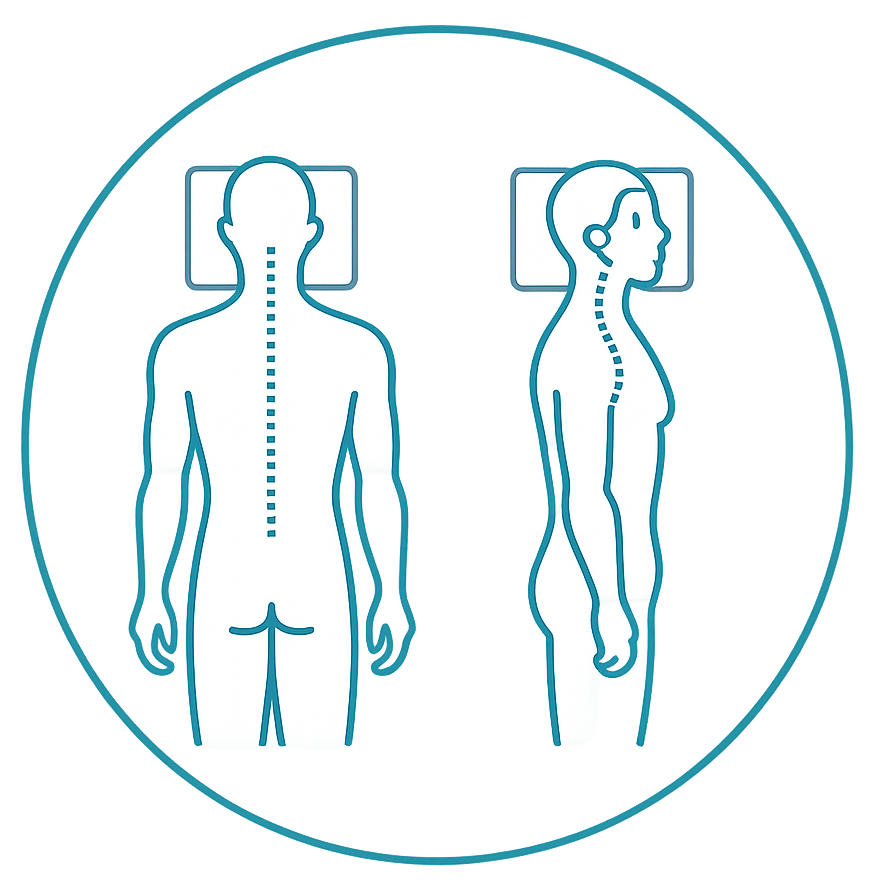
First Challenge... Positions!
Only 2 sleep positions can ever give us our perfect straight spine…
Lying on your back (supine)
Lying on your side
…thats it. No other positions can provide a straight spine so these 2 positions are what the best pillows are built for.
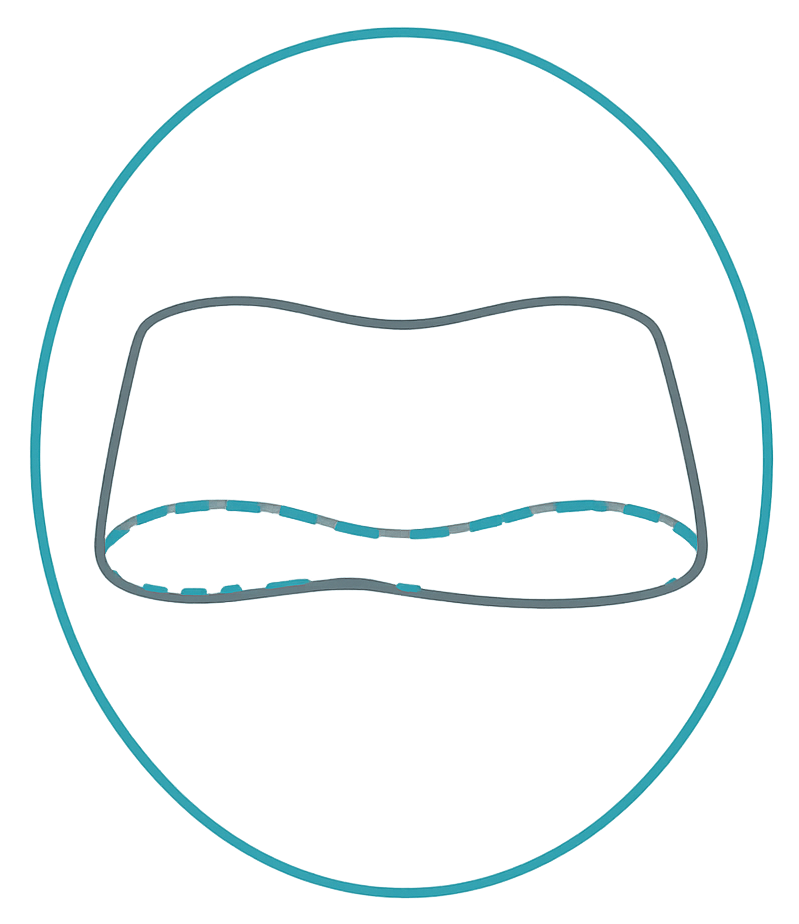
Second Challenge... Support!
The perfect pillow needs to get a persons spine aligned in as close to its ‘neutral’ position as possible. This means spreading pressures evenly across all joints and muscles. Not letting any one area bear more load than others.
‘Fill the void’
Its amazing how, up until now, pillows manufacturers just fail to understand where support for the sleeping human body is needed. The gap between the bed and the perfectly straight spine lying on it we’ll call ‘the void’. The void is the space that needs to get filled if our body is to remain symmetrical during sleep.
The side lying ‘void’ or gap is obvious, that specific area between shoulder and neck. The back lying ‘void’ being the gap behind the neck and head. The area is actually simple to measure but crucially differs for all people, tall, short, muscular, older younger and so on. We are all slightly different.
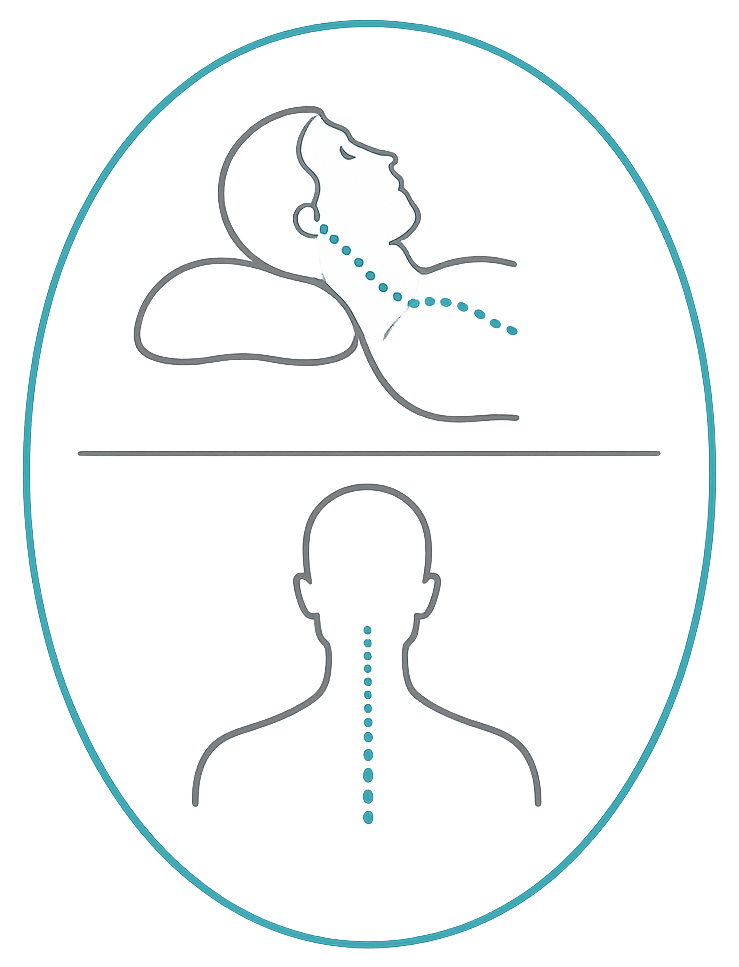
Third Challenge... Spreading Load Evenly!
Lets imagine we have our spine perfectly square and straight when we sleep… great.
We now know the neutral spine is our ultimate prize, but we also need a spreading of pressure for our pillow to give maximum comfort and support.
Side lying...
If you drew a line from the tip of the shoulder up to the neck then up to the ear and side of the head… this line is the part of the body that bears pressure. We need a pillow to take as much even pressure equally dustributed along this line as possible.
Back lying...
If u drew a line from the bump at the base of your neck, up the back of the neck to the back of the skull… this is the line that bears pressure. We need a pillow to take as much even pressure along this line as possible.

Fourth Challenge... Gravity!
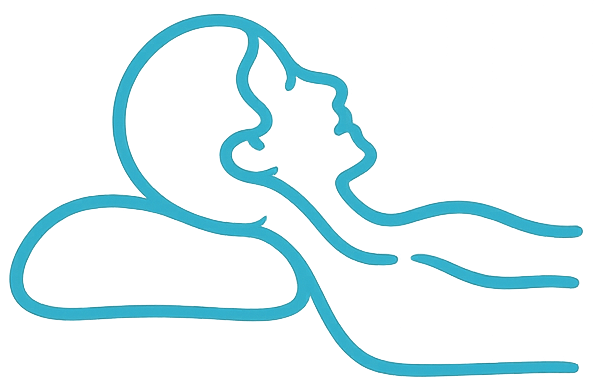
Side lying...
If you lie on your side to sleep, gravity causes a squashing of the shoulder you lie on as it meets the mattress below. This squashing of the shoulder causes a change in the shoulder/ neck void we talked about above, also know as ‘shoulder deformation’. In other words, the void is made smaller by gravity… Its unavoidable. To protect our straight spines at night, the best pillows must allow for this shoulder squashing or deformation and avoid our bodies from being bent into unusual positions!
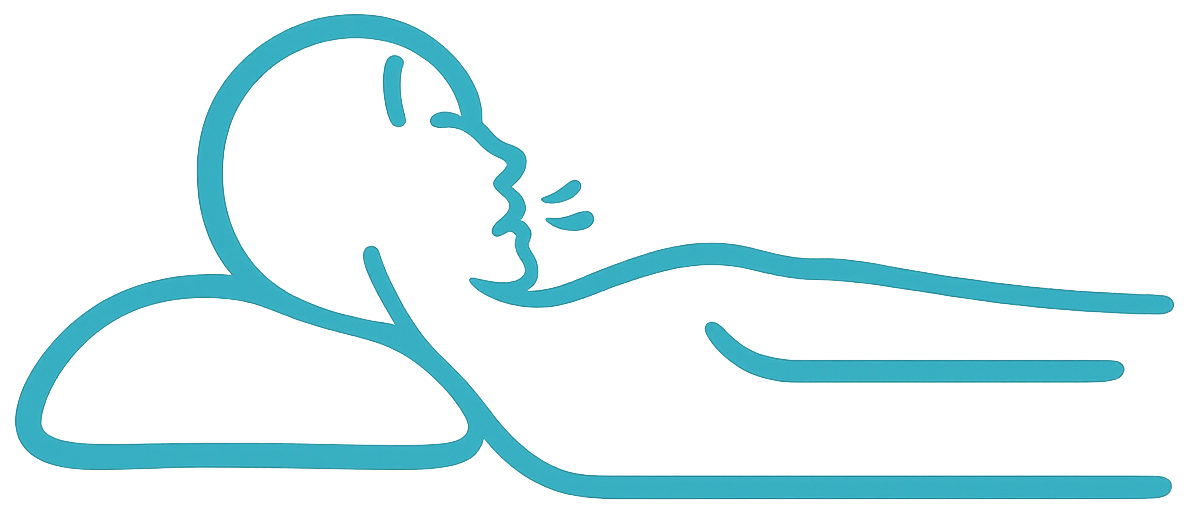
Back lying...
This is more simple with gravity. Unlike side sleeping, here the spine and shoulders take even pressure from the gravity above. There is no deformation of the body here either.
The void here simply follows the exact contour of your spine and head, hence the back lying side of the pillow is always smaller than the side lying side. Again the perfect pillow must take this into account.

Fifth Challenge... Old Habits!
Sadly if we have slept in a strange position out of habit, this is hard to overcome. During the day we could say, for example, stand on one leg, and you can do it. When it comes to sleep however, its not that easy. The body and spine over years can sometimes just get used to weird positions out of habit. Sometimes there’s no scientific explanation… it just happens. Breaking that habit can be tough but it is possible, it just takes time.
A common example is front lying sleepers. Imagine Bob has spent 30 years sleeping on his front with his head turned to his left side. He has a stiff neck when he wakes in the morning but his neck has adapted to rotating left when sleeping. The spine and neck actually accomodate this rotation to the left over time. Not great for the neck over time but its what habitually happens when bob nods off! If the spine anatomy has adapted to this poor position it’ll take bob a while to change that. Itll happen dont worry, and much better for bobs poor neck in the long run.